
1. Know and improve your soil | 40 mins
Soil texture
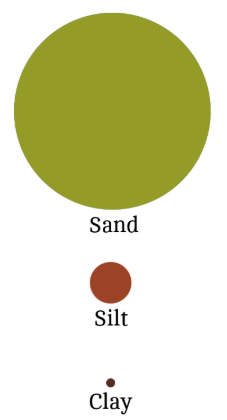
Soil texture refers to the size of the fundamental particles that are present in the soil and is typically classified as clay, sand or silt. The ideal soil structure is called Loam which is comprised of roughly equal quantities of sand and silt with a smaller percentage of clay. Identifying the soil texture will give you a good indication of the type of soils you have.
Sand particles are large and usually free draining, with lower nutrient content they warm up quicker and can be worked more easily.
Silt particles sit between sand and clay in size. A loam soil is a roughly equal mixture of all 3 particle types and gives a good, crumbly, workable soil that has good water retention and nutrient holding capacity and is considered good for growing in.
Clay particles are tiny and negatively charged so will hold on tightly to water and nutrients creating a dense soil, rich in nutrients which stays colder in spring, is harder to dig and can become waterlogged.
What to look for
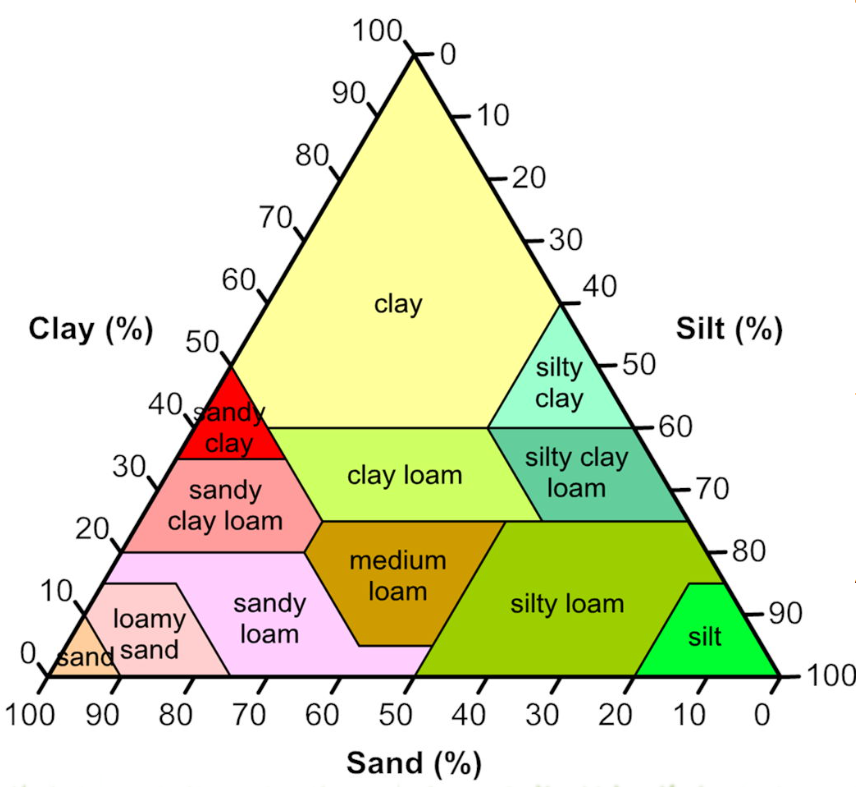 Grittiness: The individual particles will rub together causing a gritty feel which can also be audible. Sandy soils will not form together in balls or rings when worked together in your hand.
Smoothness: As the silt content increases so will the smoothness or slipperiness, which can make the soil feel soapy or silky.
Stickiness: Plasticity and cohesion of soil becomes more apparent as the clay content increases. It will be easier to mould the soil into balls and threads and it may take on a ‘polish’ when rubbed gently.
A simple test to find out the texture and structure of your soil involves separating the particles using water so that they become more easily visible, the following short video demonstrates a simple method that just requires a clear glass jar with a lid, some soil samples, and gloves to follow along with.